
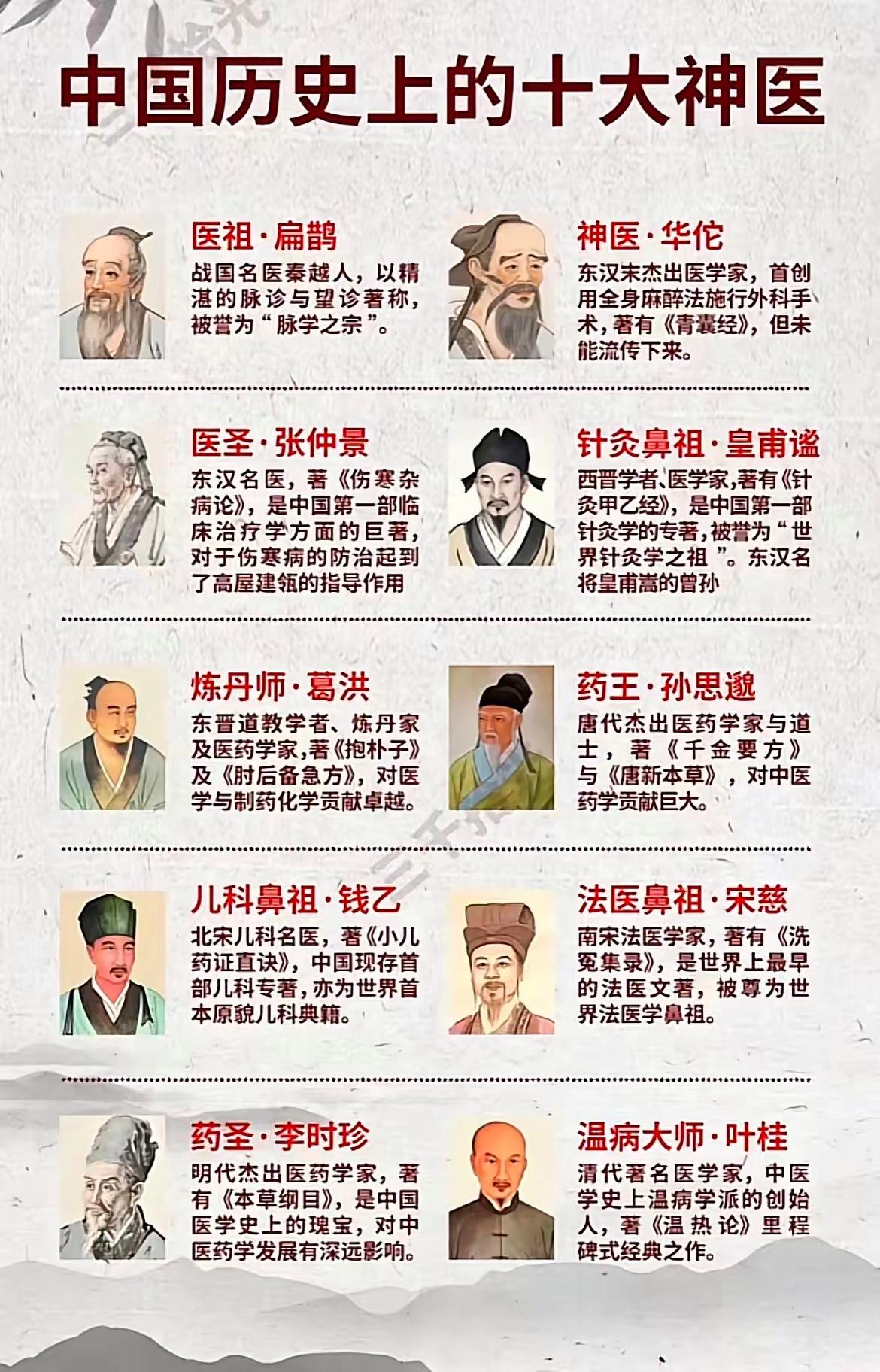
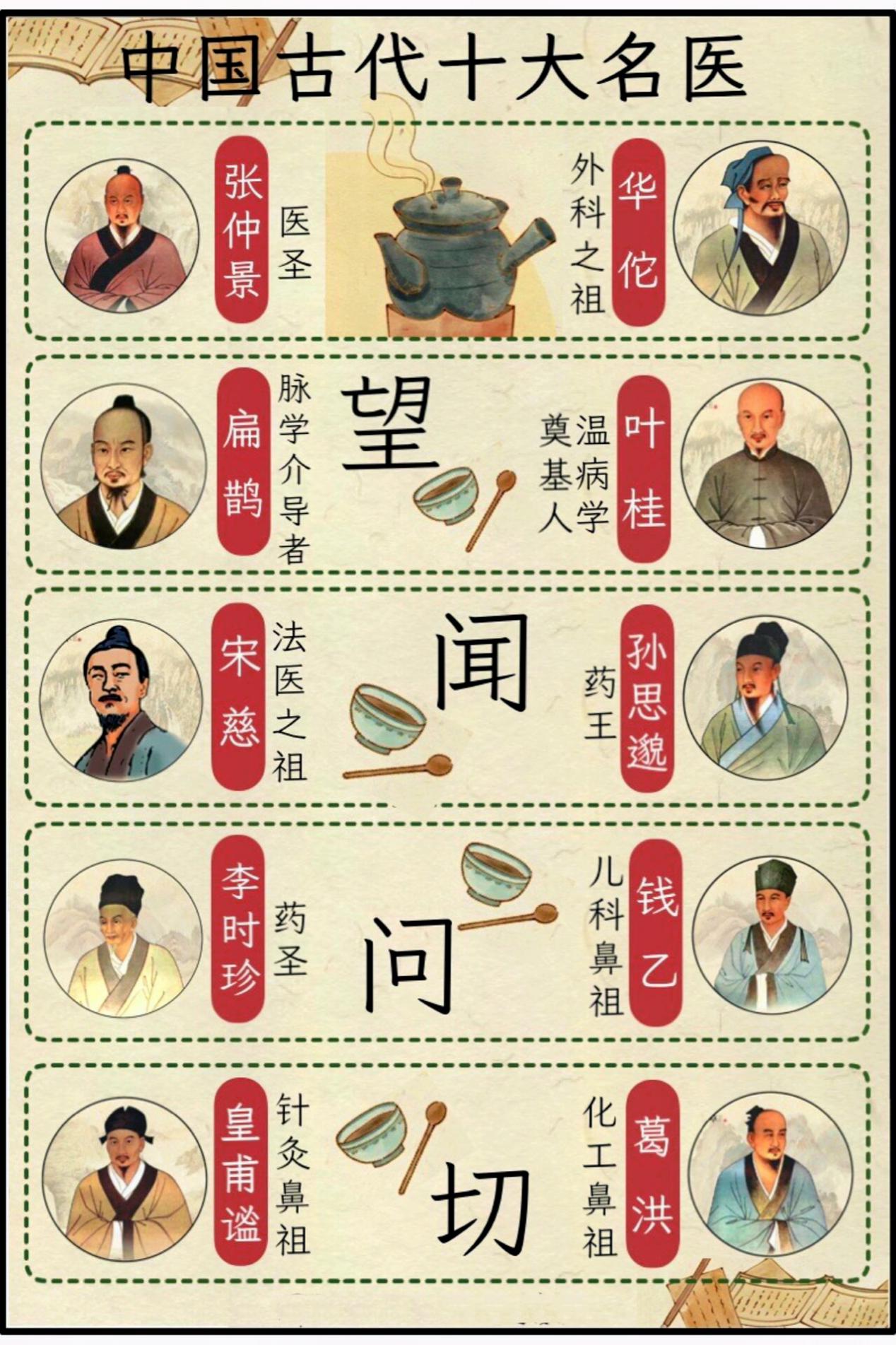
Top Ten Greatest Ancient Physicians in Chinese History
中国古代十大名医
1.医祖扁鹊 (Bian Que) – The earliest renowned physician, known as the "Father of Medicine" in China.
2.神医华佗 (Hua Tuo) – A master surgeon who pioneered anesthesia with "Ma Fei San."
3.医圣张仲景 (Zhang Zhongjing) – The "Sage of Medicine," author of Treatise on Cold Damage Diseases.
4.药王孙思邈 (Sun Simiao) – The "King of Medicine," famous for Essential Formulas for Emergencies.
5.炼丹师葛洪 (Ge Hong) – A Daoist alchemist and medical scholar, known for Emergency Formulas.
6.针灸鼻祖皇甫谧 (Huangfu Mi) – Compiled The ABC Classic of Acupuncture and Moxibustion.
7.儿科鼻祖钱乙 (Qian Yi) – A pioneering pediatrician in ancient China.
8.法医鼻祖宋慈(Song Ci)– The Founding Father of Forensic Medicine.
9.药圣李时珍 (Li Shizhen) – Compiled the monumental Compendium of Materia Medica (Bencao Gangmu).
10.温病大师叶桂(Ye Gui) – A leading figure in warm disease theory during the Qing Dynasty.
Traditional Chinese Medicine (TCM) is a comprehensive medical system that has been practiced for thousands of years. Rooted in ancient Chinese philosophy yin and yang, it emphasizes harmony between humans and nature, balancing the body’s vital energy (Qi气) to achieve health and longevity. Unlike Western medicine, which often targets specific symptoms, TCM adopts a holistic approach, focusing on prevention and natural healing. Key components of TCM include herbal medicine, acupuncture, Tui Na推拿, and lifestyle practices such as Tai Chi太极and Qigong气功.
Herbal Medicine中药: Nature’s Pharmacy &Processing of TCM
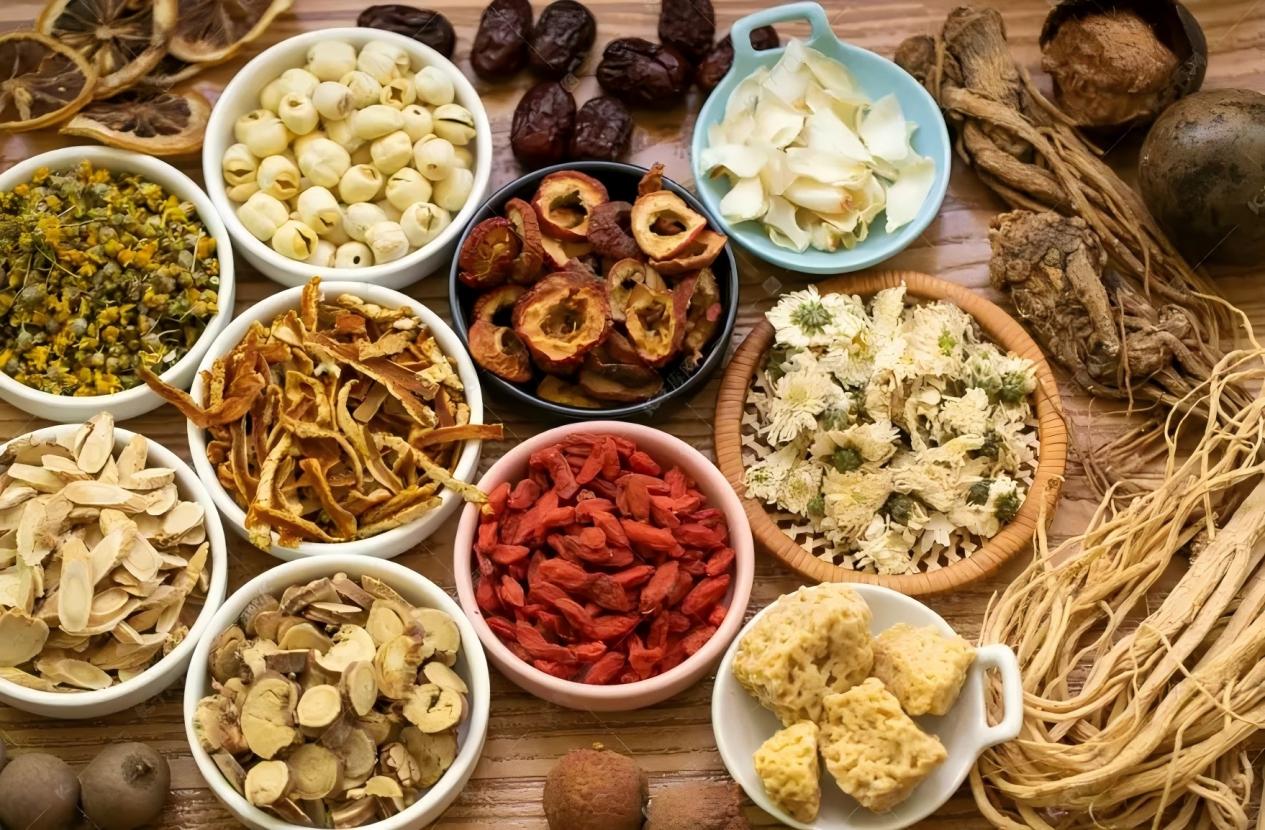
Chinese herbal medicine is one of the most prominent aspects of TCM. It uses natural ingredients—roots, leaves, flowers, and minerals—to restore balance in the body. Classic formulas, such as Liu Wei Di Huang Wan (Six-Ingredient Rehmannia Pill六味地黄丸) for kidney health or Yin Qiao San银翘散 for colds, are carefully crafted based on individual diagnoses. The Compendium of Materia Medica (Bencao Gangmu本草纲目), written by Li Shizhen李时珍 in the Ming Dynasty, remains a foundational text, documenting thousands of herbs and their uses. Modern research continues to validate the effectiveness of herbs like ginseng for energy, goji berries for immunity, and astragalus for inflammation.
Traditional Chinese medicinal herbs are derived from natural sources, including plants, minerals and fossils.It boasts a rich repository of 12,807 traditional medicinal materials. However, raw herbs are rarely used directly in clinical practice or proprietary medicine production. Instead, processed and prepared herbal slices (Yinpian饮片) are employed. A distinctive feature of Traditional Chinese Medicine (TCM) is that medicinal materials must undergo specialized processing to become herbal slices before clinical use. This practice represents a unique characteristic of TCM.The processing of traditional Chinese medicinal herbs emerged alongside the discovery and application of these herbs.Traditional Chinese Medicine (TCM) processing refers to the traditional methods and techniques of preparing herbal medicines into decoction pieces under the guidance of TCM theory and in accordance with clinical requirements. Historically known as ‘páo zhì’ (炮炙), ‘xiū shì’ (修事), or ‘xiū zhì’ (修治), this process enhances therapeutic efficacy, reduces toxicity and side effects, and improves storage convenience. It is an essential step in TCM clinical practice.
Acupuncture扎针: Balancing Qi with Precision
Acupuncture, perhaps the most internationally recognized TCM practice, involves inserting fine needles into specific points along meridians (energy pathways) to regulate Qi and blood flow. According to TCM theory, illness arises when Qi is blocked or imbalanced. Acupuncture helps relieve pain, reduce stress, and treat conditions like migraines, arthritis, and digestive disorders. The World Health Organization (WHO) acknowledges its efficacy, particularly in pain management and neurological rehabilitation.
Moxibustion 艾灸
Moxibustion is a traditional Chinese therapy that involves burning dried moxa (Artemisia argyi) near or on specific acupuncture points to stimulate circulation, promote healing, and restore balance in the body. This ancient technique, often used alongside acupuncture, is based on the principles of Traditional Chinese Medicine (TCM), which emphasizes the flow of Qi (vital energy) along meridians.There are two main types of moxibustion:Direct Moxibustion – A small cone of moxa is placed directly on the skin and burned, sometimes leaving a mild scar.Indirect Moxibustion – The moxa is held above the skin or placed on an acupuncture needle, avoiding direct contact with the body.
Moxibustion is commonly used to relieve pain, improve digestion, strengthen the immune system, and address conditions like arthritis, menstrual disorders, and chronic fatigue. It is a safe and natural therapy when performed by a trained practitioner.By warming the meridians and dispelling cold, moxibustion helps harmonize the body’s energy, making it a valuable part of holistic health practices.
Tui Na推拿: Healing Through Touch
Tui Na, a therapeutic form of Chinese massage, combines acupressure, joint manipulation, and rhythmic kneading to stimulate circulation and promote healing. It is particularly effective for musculoskeletal issues, such as back pain and sports injuries, as well as internal disorders like insomnia and digestive problems. Unlike relaxing spa massages, Tui Na is a clinical treatment often used alongside acupuncture and herbal medicine.
Holistic Philosophy and Modern Relevance中医核心理念
TCM’s core philosophy—prevention over cure—aligns with modern wellness trends. Practices like seasonal eating, meditation, and Tai Chi emphasize maintaining health rather than just treating disease. Today, TCM is gaining global recognition, with integrative medicine combining its natural approaches with Western treatments. However, preserving this ancient wisdom requires scientific validation and cultural appreciation.
In conclusion, TCM is not merely a medical system but a profound cultural heritage. Its time-tested practices—herbal remedies, acupuncture, and massage—offer natural, sustainable healthcare solutions. As the world seeks holistic and preventive medicine, TCM’s enduring wisdom continues to benefit humanity.